
Your Partner in Development
We got into the work of coaching and leadership development to support the human needs of business leaders and high-performing professionals in a way that enables you to work at your best.
We take our mission seriously, but that doesn’t mean we won’t have fun in our work together — quite the opposite! Our sessions are places to rise above the whirlwind and give space to the stuff in your head that doesn’t usually get room to breathe.

Meet the Founder
Ian Lopez, PCC
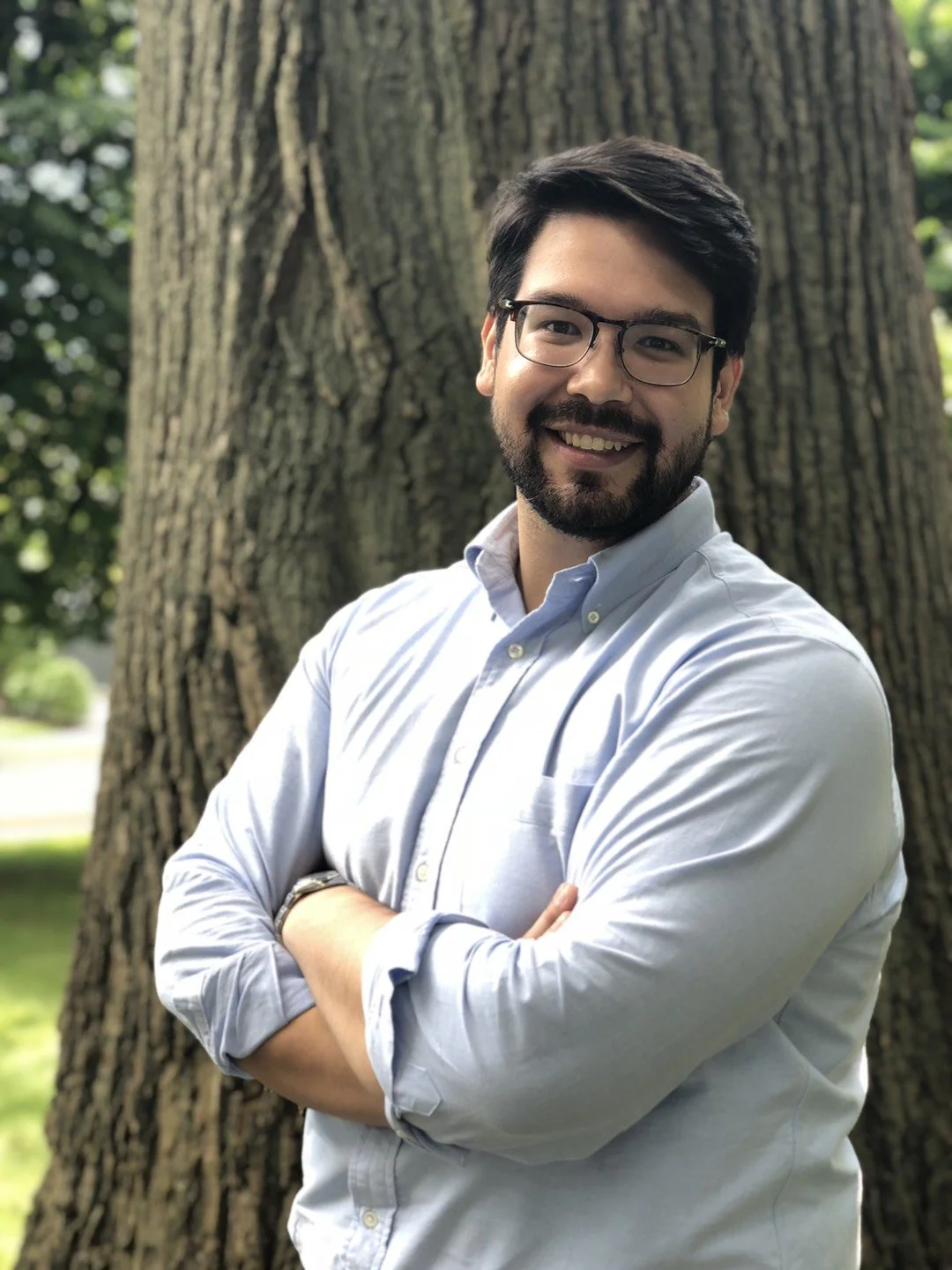
I founded Cambio Leadership to support leaders navigating one of the most underestimated transitions in professional life: the move from high-performing individual contributor or line manager to effective people leader.
It's a transition most organizations expect their best people to figure out on their own. In my experience — first as a strategy consultant working inside complex organizations, now as an executive coach — that assumption is one of the costliest ones a company can make.
As a consultant for nearly a decade, I advised senior leaders across industries and geographies on some of the most consequential decisions of their careers: market disruption, organizational change, acquisitions, revenue management strategy. I became a trusted thought partner to leaders from analyst to CEO, and I saw firsthand how organizational dynamics, competing priorities, and performance pressure shape the way people lead. That experience is foundational to the way I coach.
What I do now is pair that organizational perspective with rigorous training from the Hudson Institute of Coaching to support leaders not just in understanding what needs to change, but in actually changing how they operate. That second part — the doing, not just the knowing — is where most development efforts fall short. That's where I focus.
My clients are typically newly promoted directors and VPs, leaders stepping into expanded scope, and the HR and L&D professionals who support them. The work is specific to what each leader is navigating right now, but the high-level goal is the same: to help them find their footing faster, lead their teams more effectively, and make the most of the opportunity in front of them.
I hold a Professional Certified Coach (PCC) credential from the International Coaching Federation and am a Hudson Institute Certified Coach. I'm also certified in Hogan Assessments, which I use selectively to deepen self-awareness at the start of an engagement.
A native of San Antonio, TX, I live in New York City with my wife, Alexa, and our Australian Shepherd mix, Echo. I also chair the Associate Board of Scholarship Plus, a four-year college scholarship and mentorship program for NYC students. You might also find me exploring Central Park, playing basketball, or eagerly awaiting my next slice of pizza.

Fundamentals of Coaching
Coaching is a facilitated process designed to accelerate development and maximize potential through mindset and behavior change.
I hold a credential through the International Coaching Federation (ICF) and trained at the Hudson Institute of Coaching in Santa Barbara, CA.
-
Coaching recognizes the resourcefulness and uniqueness of the client. A good coach will:
Ask, observe, or challenge… but generally not tell
Lead from behind, i.e., recognize the client’s knowledge of their own situation is greater than the coach's
Meet the client where they are
-
Coaching is not about "hacking" performance with quick wins. Rather, coaching allows for:
Pursuing bigger goals that may get lost in the day-to-day shuffle
Reflecting on current behavior or performance and linking it to a desired future state
Creating experiments that get at what works for you
-
We sometimes describe coaching as “business therapy.” While the practices both rely on applied psychological principles, the work we do differs in key ways:
Coaching uses the client’s current situation and what they know and feel right now to design and step into their future
In contrast, therapy often unpacks the present through the lens of the past (often a good complement to coaching!)
Coaches will never diagnose a client with any disorder or condition
Principles of Our Coaching Approach

Navigate inflection points
We work with established and emerging leaders alike to approach their unique landscapes and challenges more effectively.
We support executives as they prepare to take on new or expanded roles, anticipating demands and identifying both the potential barriers to effective performance and the resources at hand that will position them to succeed.
We also unlock potential in leaders whose effectiveness is constrained by blind spots, or who simply want to push themselves to new levels of development.

Pursue lasting development
A successful coaching engagement will not focus on tactical recommendations; rather, we make space for the client to identify explicitly the things they or others know implicitly about the way they operate or the challenges they face. In doing so, the coach and client lay the foundation to work together to address these challenges.
Working together is a critical element here. Coach and client must commit to examine honestly and rigorously the goals and barriers at hand, both internal and external to the client.

Engage your whole self
An engagement will touch upon areas and themes of a client’s life beyond the workplace, even as we move toward professional goals. Perhaps not surprisingly, deep-rooted behaviors and assumptions that we bring into the office may have begun and/or been reinforced in other parts of life.
Along the way, we typically identify useful items that clients may take with them beyond the office.

Break free from old stories
As humans, we are powerful storytellers. Often, change is difficult precisely because it requires a rewriting of stories that have served us in the past.
In tackling the challenges that are most present for clients, we create space to critically reflect on the stories we might alter (and how!) to step into the change we desire.

Connect with core values
Our work often begins with taking stock of where we are and what "makes us tick."
We support clients to articulate and deeply engage with values and principles that guide them, whether for the first time or as a revision of an existing practice.
We also build awareness of strengths, skills, and resources that the client can rely on throughout the development journey.

Architect your next chapter
Moments of transition may be difficult and emotionally charged, but they are also full of opportunity to reflect, rethink, and re-imagine.
Whether getting promoted, changing careers, moving into retirement, or going through family changes, we work with our clients to lay the foundations for thoughtful, intentional transitions and to create plans for the "new normal."
FAQs I:
Understanding Coaching
-
Training delivers knowledge and skills, i.e., it tells you what to do. Coaching works on the gap between knowing and doing. Most leaders who struggle in a new role aren't missing information; they're navigating a behavioral and identity shift that no training program is designed to address. A coach works with you on what's actually happening in your real-world context right now — the team dynamics, the new skills, the personal patterns that may be getting in the way — and helps you develop the judgment and habits that produce lasting change.
-
A mentor shares their own experience and offers advice based on what worked for them. A consultant diagnoses a problem and prescribes a solution. A coach does more asking and less telling. The job of a coach is to help you figure out what you need to do, why you're not already doing it, and what it would take to change. The answers come from you. The coach works with you to create the conditions for that to happen.
-
No, not by a long shot. While some coaching is specifically remedial, most Cambio Leadership clients are high performers and are navigating a significant new challenge. They might be developing a specific behavior to become more effective, but it’s more about accelerating vs. catching up. Coaching is what good athletes, executives, and high performers use to get better. The most successful leaders we know are often the most intentional about their development.
-
There's no script or fixed curriculum. We define a broad arc for our engagement at the outset, but each session starts with what matters most to you right now: a challenge you're navigating, a decision you're working through, a pattern you've noticed and want to understand better. We ask questions, challenge assumptions, and work through the thinking together. Sometimes it’s a relatively straightforward conversation… other times, we might wander significantly and find some value off the beaten path. Sessions typically run 60-90 minutes and are held every two weeks. Between sessions, you're applying what emerged in conversation to your real work. That application is where the actual development happens.
FAQs II:
Engagement Details
-
1-on-1 coaching engagements typically run 6-12 months, meeting biweekly. That timeline reflects how behavioral change actually works: it's not a 30-day fix. Unwinding old narratives and building up new behaviors both take time, experimentation, and reflection.
Group coaching cohorts typically run six months, with some flexibility.
Workshops are standalone or can be structured as a series over a longer duration. The right format will depends on what you're navigating, and we'll align on that before we start. -
Yes, unless there is an immediate danger to yourself or others. Coaching sessions are strictly confidential outside of extreme circumstances. As an ICF-credentialed coach, I'm bound by the ICF Code of Ethics, which requires maintaining confidentiality about all information shared in the coaching relationship. If an organization is sponsoring the engagement, the only information I as coach will share with them is logistical — whether sessions are taking place or not. What you bring to the sessions stays between us.
However, it is often in the interest of the individual coachee (and their organization) to share themes, goals, and insights from sessions with their manager, team, or other stakeholders. Those discussions may happen as part of the coaching engagement with a coach present (or not) but are always led by the coachee. -
We hope it doesn’t ever get to that point. Our chemistry check is designed to test fit before commencing an engagement. Oce we begin, we build in regular check-ins to assess whether the engagement is producing what you need. If it isn't, we’ll do our best to adapt mid-stream — adjusting the focus, the approach, or the structure.
That said, if you want to end an engagement, you can. We'd rather have an honest conversation about fit than continue something that isn't serving you. -
Both, but I always prefer in-person. There’s always a richness to in-person interactions that is hard to capture virtually, despite our video conferencing software’s best efforts!
Most 1-on-1 engagements happen virtually, especially for clients outside of New York City. For NYC-based clients, I will happily travel to your office or find another suitable location to conduct our sessions in person if convenient for you.For workshops and group coaching sessions, I am available to travel as needed to facilitate. Workshops are also available in virtual formats, but some activities may be limited.
-
Selectively. We're certified in Hogan Assessments and use them when they'd meaningfully accelerate self-awareness or help build a shared development vocabulary at the start of an engagement. If you’ve done assessment work in the past and would like to bring it into a coaching engagement, let’s discuss. Chances are, we’ll be familiar enough to frame it in the context of our work.
As a general note, assessments are a tool that may help us in our work, but they are not a substitute for the work of development itself.
FAQs III:
For Organizations
-
Training programs deliver knowledge to groups on a fixed timeline. Coaching delivers behavioral change to individuals on their actual timeline. Gartner's research found that traditional leadership development structures like seminars and lectures don’t produce positive results on their own. Coaching bridges that gap to actual development through sustained, individualized support that connects to the leader's real-world context. This personalized, context-rich structure helps coachees translate knowledge to productive practice.
-
Leadership development has long suffered from hazy metrics, and frankly, no one has a perfect measure of ROI for coaching, workshops, or other programs. Often, it’s one part of a multi-variate ecosystem that produces success or failure.
That said, research on first-time manager development programs shows an average annualized ROI of over 400%, driven primarily by retention improvement, faster time-to-effectiveness, and reduced cost of failed or slow transitions. The metrics we may track together with sponsoring organizations include team engagement, 360-degree feedback improvement, and the leader's own assessment of their effectiveness over time. We'll align on what success looks like before we start so you have a clear basis for evaluating the investment.
Also worth noting — organizations with sustained, deliberate approaches to leadership development across multiple levels of the hierarchy consistently report lower voluntary turnover and higher employee engagement than their competitors — and the research links strong leadership quality to meaningfully better financial performance, including profitability and revenue growth.
-
The content of coaching sessions is strictly confidential — the coach will not provide reports to the leader's organization on what was discussed. What we can share, if agreed in advance, is high-level progress against the goals set at the start of the engagement, though again, not the substance of the conversations. This is standard practice under ICF ethics guidelines, and it's what makes coaching effective: leaders need to be able to speak honestly without worrying that what they say will reach their manager.
We typically build into our coaching process check-ins with the leader’s manager and/or engagement sponsor. At these sessions (or otherwise), the leader receiving coaching may share more specific insights, topics, or themes from coaching at their discretion.
-
Yes. Most of our 1-on-1 work happens virtually, which makes geography a non-issue. For group coaching and workshops, we have versions designed for distributed participation from the start. It's not a downgraded version of in-person; rather, it's a different format that works well in its own right.
-
With a conversation. Most engagements start with a 30-minute call to understand what you're navigating and what kind of support would actually make a difference. We'll give you an honest read on what we think would help — and if that's not something we do, we'll tell you (and we’ll likely be able to help you find the right partner).
Ready to Move Forward? Let’s Talk
Fill out the quick form below, and we’ll set up a free, no-pressure chat to explore how we can help.